14 July 2026 · Translated from the Italian
The Hook and the Ring
Closing a hook inside a ring. We have always done it, without thinking. The carabiner in the link of the chain, the fish-hook in the eyelet, the bolt in the ring of the gate. Two shapes born incomplete, which exist to find each other. On their own they are scrap metal, together they hold.
It holds beyond iron, too. In nature whole beings live this way, made of two different organisms that would die apart and together colonise even bare rock. The lichen clinging to the boulder is already this, a silent pact between one who offers structure and one who offers nourishment. Two lacks that together become a form capable of standing up to wind and frost.
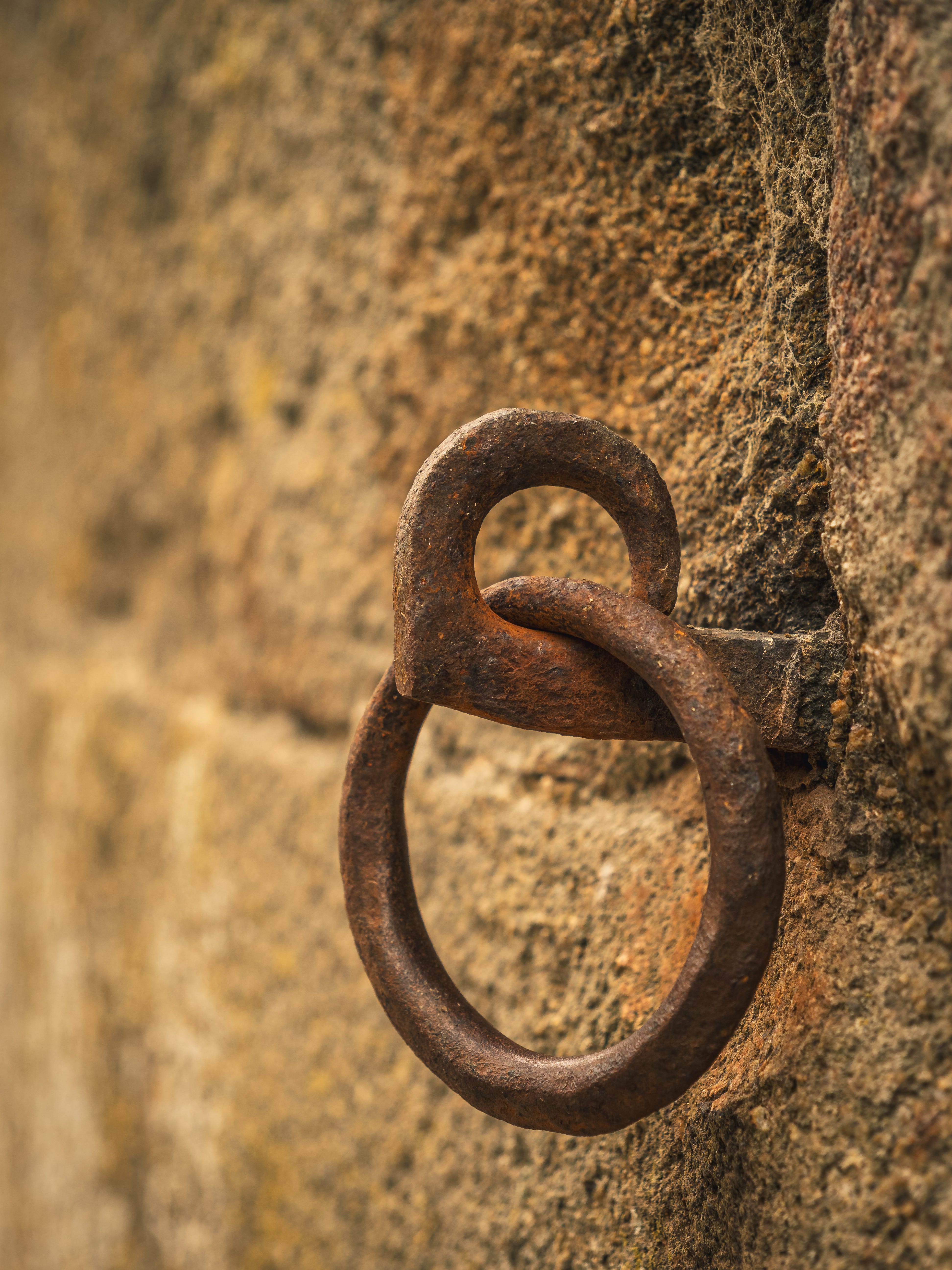
In life we do the same. Something in us can hardly bear to stay open, and keeps looking for another piece to close itself into. A person, a role, a bond, a cause. Something to complete the shape we struggle to hold on our own.
Sometimes that fit is a stroke of luck, and holds us up for years. Sometimes it is a curse, and drags us down in exactly the same way. What has always sent a shiver down my spine is that the mechanism is the same. The gesture is identical. All that changes is where it takes us. And we almost never understand it at the moment the fit happens. We understand it much later, when we are already hooked.
I’ll start with the bright side, because it exists, and it is more beautiful than we imagine.
In Seattle, inside a care home for more than four hundred elderly people, there is a nursery. Inside, right inside. Over a hundred children, from a few months old to five, spend their days in the same building where people of eighty, ninety, a hundred live. Five days a week they do things together. Music, drawing, lunch, stories, or simply being in the same room.
The person who filmed that place described something that really struck me: before the children arrived, the old people seemed half switched off. Sitting, absent, some of them asleep. Then the children came in, and the old people lit up again. They came back to life. As if someone had switched the power back on.
In that building, along a corridor, at some point they also put in a handrail lower than usual. It isn’t for the children, it’s for the old people in wheelchairs. So they can grab hold, lift themselves up on their arms and stay standing long enough to watch the little ones through the glass. A whole place rethought around a desire both tiny and immense, to see up close the life that is beginning.
The fit here is perfect, and you can see why. On one side there are people society has stopped looking at, who have stopped feeling useful, who sit in a room waiting for the hours to pass. On the other there are creatures with an absolute need to be looked at, held, listened to. One has all the time there is and no one to give it to. The other needs all the time in the world. They fit together. And in the fit, both become whole again.
The detail I find most beautiful, though, is another one. Children and the old are the only two kinds of human being who truly live in the present. Children because they don’t yet have a past to weigh them down, the old because the future is no longer their measure. All of us in between live thrown forwards or backwards. Not them. They are here. And they meet in the only time they share: now. The hook and the ring closing at the exact point where both, for opposite reasons, have stopped chasing.

But if the fit were always like this, it would just be a lovely fairy tale. And life is not a lovely fairy tale.
Because the very same mechanism, the need to complete ourselves in someone else, is also what ruins us. How many times have we seen two people hook onto each other the wrong way, with neither of them able to break free? Those who need to rescue find those who need to be rescued, and they hold each other up inside a dependence they call love. Those who need to control find those who need to be commanded. Those who are afraid to exist find someone whose shadow they can become. These are perfect fits too. They work beautifully. Except that instead of holding you up, they drag you down.
The substance is simple and ancient. Two voids that find each other can heal each other or devour each other, and from the outside, in the early days, they look identical. In fact, at the start the fit that devours often seems more intense, more necessary, more meant to be than the one that saves. Because lack recognises lack with a speed that fullness doesn’t have. Underneath lies an ancient reason, older than words. Our nervous system, when it struggles to find peace on its own, looks for it in someone else’s body. It happens when we are newborns, when the heartbeat of whoever is holding us teaches ours to slow down, and it goes on all our lives, even once we stop seeing it. It’s the reason why beside certain people our breathing lengthens by itself, without anything happening, while beside others we stay on alert even in silence. The body tunes itself to whoever is near, like an instrument. We regulate each other, we lend each other the calm that escapes us when we are alone, and it is one of the most beautiful things two human beings can do for each other. But borrowing calm and simply being sedated, seen from the inside, look very much alike. We fall in love with the piece that fits perfectly into our void, and we don’t ask ourselves whether that piece is filling us or just plugging the hole.
Think about your own stories, for a moment. The relationships that opened and closed the seasons of your life, the decisive friendships, the phases that went through you more than you went through them. How did each one begin? There was a precise point where you hooked on, and memory almost always finds it straight away: the moment when something of yours, left open, recognised the shape of the other.
No one fits by accident.
And then there are all the wrong people we believe we have met in our lives. We call them that, wrong, as if the fault were theirs. But how much of those encounters was really chance, and how much was our need going out to find them? Looking back honestly, those bonds held together less than they seemed to, and hid a great deal. The fear of being alone. The fear of staying open. The fear of having to hold ourselves up. We call them wrong to avoid the most uncomfortable thing. That we often chose them ourselves, with precision, because they fitted exactly at the point where we were fragile. Seen like this, those choices stop looking like bad luck and become a map. The exact point where someone managed to fit in tells you, better than any mirror, where we were open and what shape our void had in those years.
And so, in those stories we thought were light, we found scorching sun. We drew close to the warmth and got burned. But it is precisely in that burn, sometimes, that we saw our own shadow for the first time. What we were looking for, what we feared, what we were willing to lose rather than stay open. The wrong fit, if you survive it, teaches you things about yourself that no happy fit would ever have shown you.
I see it outside love, too. There are people who hook onto a job that destroys them because it gives them the identity they lack on their own. People who hook onto a cause, a group, a sense of belonging, and erase themselves inside the fit. People who hook onto a parent who needs looking after, and behind the care hide the fear of a life of their own. The hook and the ring are found everywhere, not only between two lovers. And everywhere the same double law applies: the same gesture that completes you can consume you.
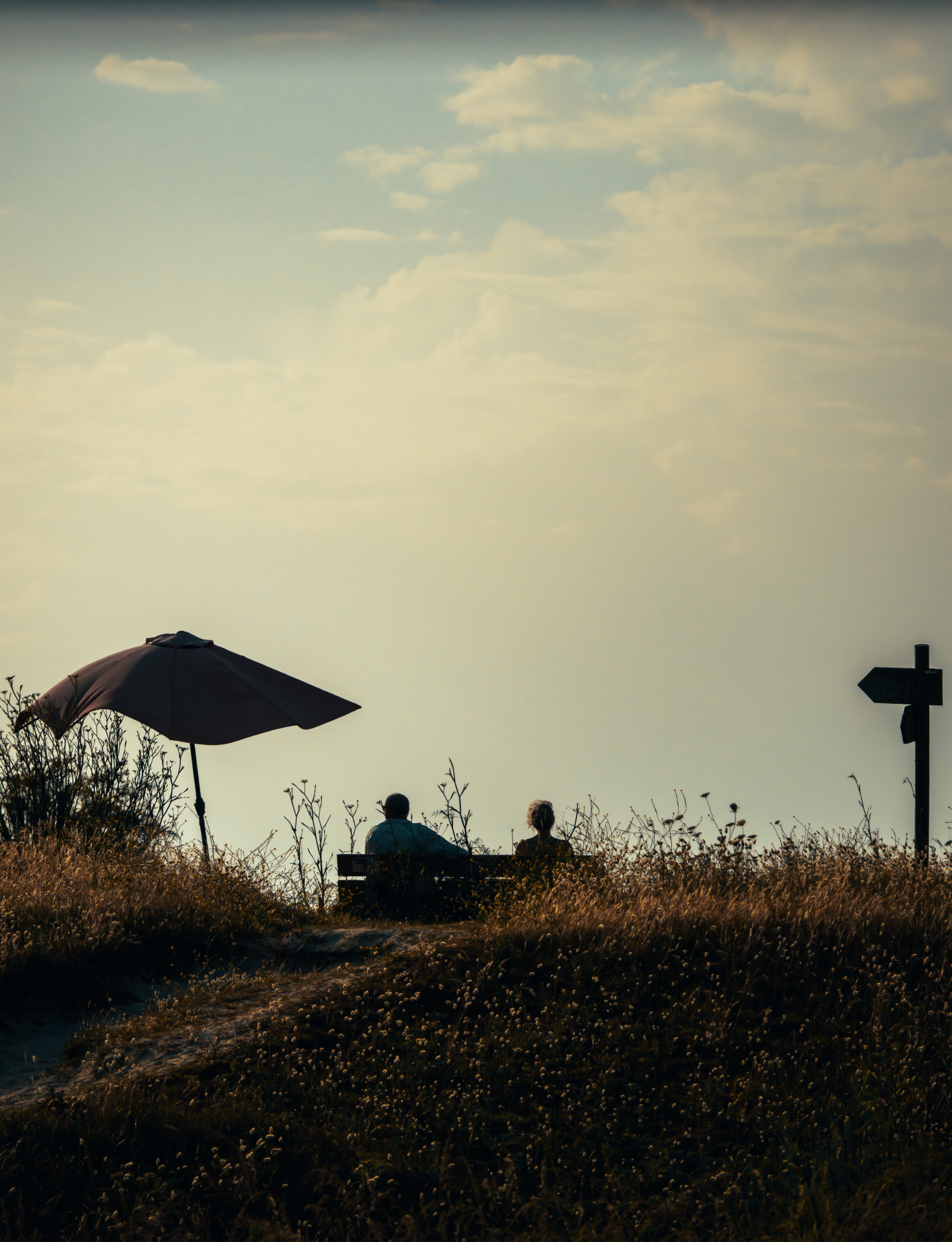
I think we spend most of our lives looking for our ring. It is an honest need, it is our nature. On your own you don’t last, we knew it as children when we reached for a hand, and we will know it when we are old and look for someone to light us up again.
The fits that save, in the end, leave us freer. The old people and the children of Seattle let each other go: the children grow up, the old people go. The good fit passes through without holding on, and then sets free, leaving both richer. It only needs to last as long as it is needed, and then it lets you go.
The others, on the other hand, tighten. And that is how you recognise them, if you have learned to feel it: after the right fit you feel larger, after the wrong one you feel smaller. Care gives you back to yourself. Dependence takes you away from yourself and ties you to the hook.
Unhooking yourself, once you are hanging, is the hardest thing there is. Because a ring that has held us for years stops feeling like a choice and becomes part of us. Detaching it feels like tearing off a piece of ourselves. And yet that is exactly where we find out whether that fit was holding us up or holding us prisoner. In the pain of letting it go, and above all in who we become once we have let it go.
The rest is the courage to unhook when we realise we are hanging. Even when the fit was perfect.
In fact, especially then.
Mantica arrives every Tuesday, in Italian. Thousands of people read it, and it’s free.
Subscribe to ManticaMore letters →Stories →