16 September 2025 · Translated from the Italian
The Great Resignation
It is a line of thought I began years ago, and it has led me to think that, perhaps, something has gone wrong.
Let me try to explain.
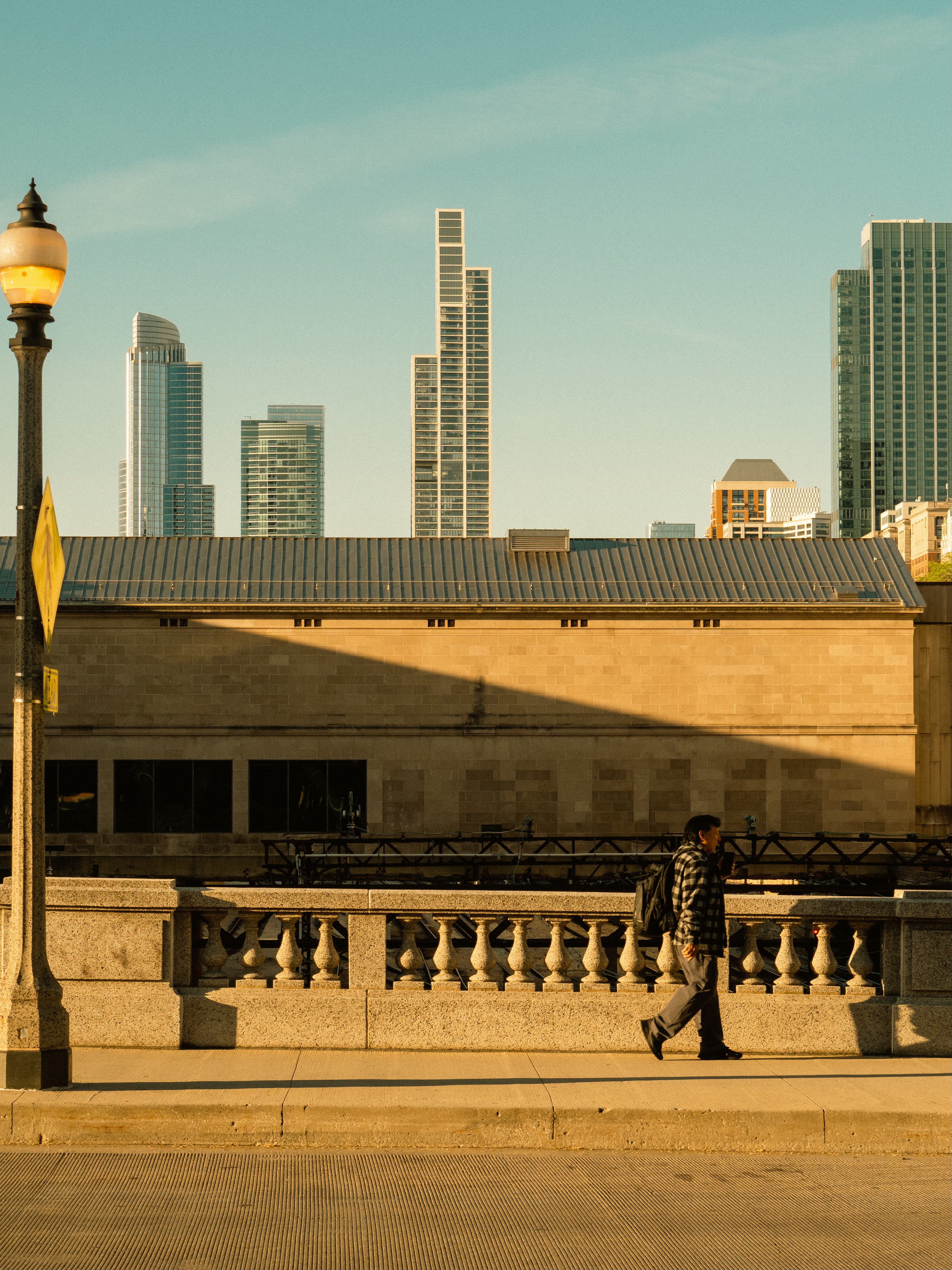
Today, in the city, a person works on average between forty and forty-five hours a week. And if we look at life in the countries considered developing, working hours are far longer.
As far as we know, around 15,000 years ago the work of hunter-gatherers consisted essentially of trying to get hold of food. Hunting could take up at most 5–6 hours, and not even every day.
Clearly their life was not as comfortable as the one some of us can enjoy today, but this comfort of ours is evidently paid for dearly. We try to carve out some free time in a perpetual frenzy that keeps us caught up in an endless chase after productivity.
By early afternoon a hunter-gatherer was already back at camp, and all that free time gave him the chance to be with his fellow humans and his family. He had far more time to chat, to tell and listen to stories, to play with the children and, why not, even to do nothing at all. What is more, he lived in close contact with nature.
Today we often don’t even know the other people living in our own building. We are stressed, and often held hostage by our cars for hours, stuck in traffic.
True, they risked their lives every day because they had to watch out for predators and many other dangers, but isn’t it just as true that, metaphorically, we too take risks on the roads that lead us to work?
Contrary to what one might think, from skeletons found by researchers we know that hunter-gatherers were less exposed to the risk of hunger or malnutrition. It even seems they were healthier than those who came after them in history, in the age of the agricultural revolution. Average life expectancy was certainly lower than today’s, somewhere between 25 and 35 years, but only because infant mortality was high, for obvious reasons. Once past this hurdle (no small one), hunter-gatherers could live to 60 and even beyond. And besides, who ever said that a long life means a better life?
Perhaps the existence of a hunter-gatherer made for a more interesting life than the one our industrial society offers us today in densely populated, polluted cities. The point, in fact, is not whether “things were better when they were worse”, but the illusion that our living conditions have improved, when, swept along by our hurry, we are forgetting which way we are going. Decades of performance measurement have created a toxic work culture, just as all the other pieces of our society are toxic.
So we have a duty to remember why we are here, to take back the meaning of things.
We have forgotten that we ought to work “at” something and not only “for” someone. And perhaps this, to my mind, is capitalism’s greatest victory: it managed to anaesthetise the masses with consumerism; in exchange it stole the dimension that defines us most: time.
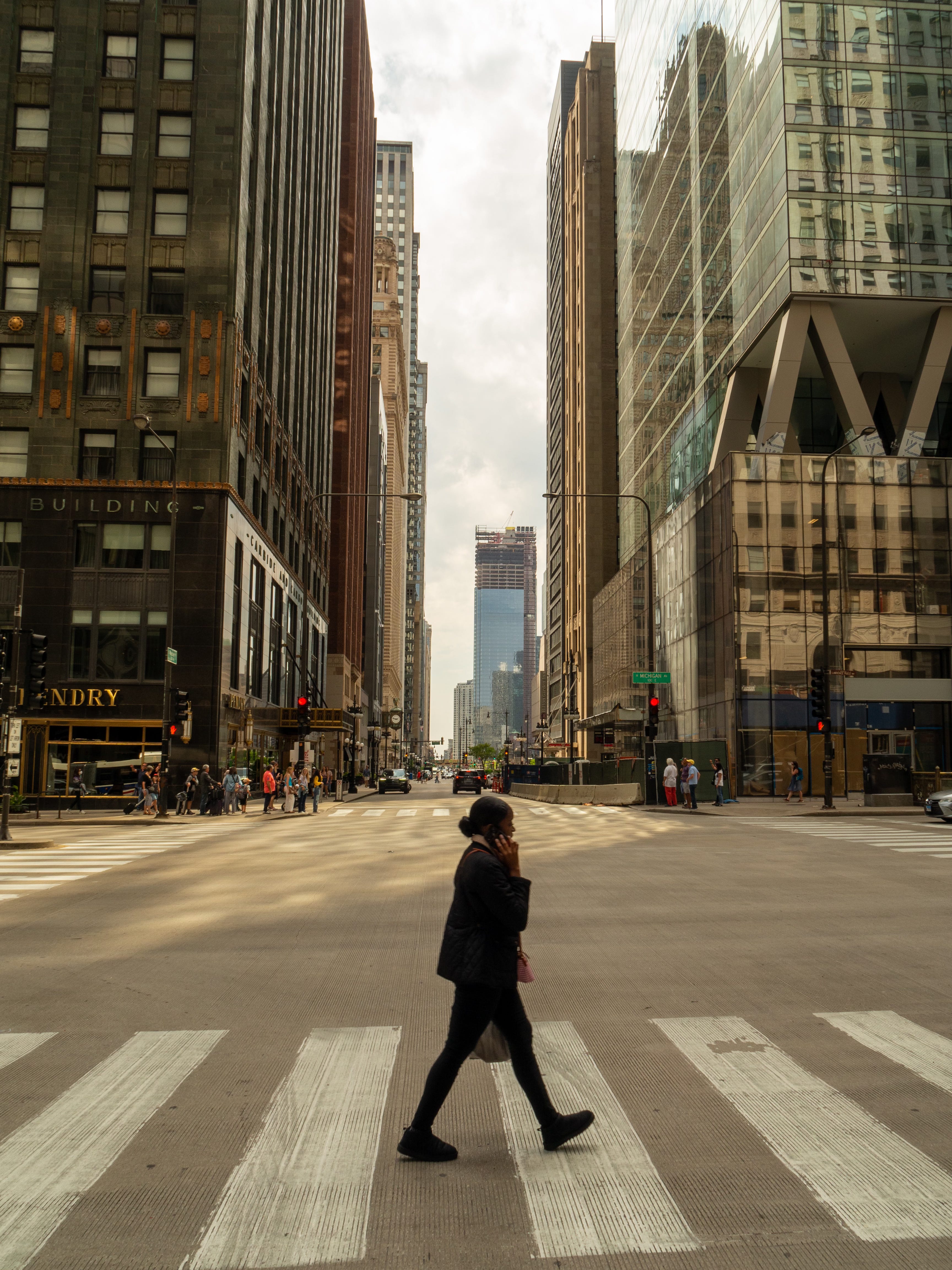
It is true that people often find deep meaning in their work.
But for decades companies have exploited this fact to push employees to find the meaning of life in their work. Think about what we actually do all day long: those who don’t do physically gruelling work are drowning in a sea of useless emails. That cannot be the purpose of a human being’s existence. And for the lucky ones who have fulfilling work, there are stories of people who at some point were forced to change, and this is a reminder that things don’t last for ever. Not even our choices. A sudden health problem, the natural effects of ageing or an economic crisis can cost us our jobs. Every person has unlimited potential, a unique “genius”, as the great writer and philosopher Henry David Thoreau called it. Going in search of our genius – whether in art, in conversation or in the practice of jujitsu – will awaken us, carrying us “to a higher life than we fell asleep from”, Thoreau wrote. I am not talking about leisure activities, like food and wine tourism, that force other people to work more. I mean the kind of activity that lets us slip out of the ordinary flow of time without moving a single kilometre. Thoreau spent his mornings “rapt in a revery”: they were not “time subtracted from my life”, he wrote, but something higher than my usual habits.
And we struggle terribly with this, because for decades we have been used to tying a person’s identity to the success they have at work. It is the glorification of work, which rewards whoever produces ever more wealth for the system, when what we should be doing is giving dignity back to mediocrity. Claiming the right to a normal life, one that wants neither to show off nor to burn the most precious resource we have (time) chasing false needs.
Just think of the term “free time”: it is ridiculous and conceptually wrong.
Free from what? From work?
There is only one kind of time, and we choose how to spend it. But calling it that implicitly leads us to think that working is our common destiny, an obligatory, forced path with no way out. But it isn’t so, because time is the same for everyone, and so is the sacred right to enjoy the privilege of being alive on this planet.
Useless work
Our society is addicted to work. If there is one thing right and left seem to agree on, it is that jobs are a good thing. Everyone should have a job. Work is our badge of moral citizenship. We seem to have convinced ourselves, as a society, that anyone who isn’t working harder than they would like to, at something they don’t enjoy, is a bad person. Unworthy. A layabout, as they’d say where I come from. As a result, work comes to absorb ever greater shares of our energy, of our time and of our entire lives.
Just think of this absurdity: much of this work is completely pointless. Entire industries, entire lines of work exist mainly to convince us that there is some reason for their existence. Useless work crowds out useful work (think of teachers and administrators buried in paperwork); it is also almost invariably better paid. As we saw during the lockdowns, the more obviously your work benefits other people, the less you get paid.
This system no longer makes sense.
It is also destroying the planet. If we don’t free ourselves of this addiction quickly, we will leave our children and grandchildren to face catastrophes on a scale that will make a problem like the recent pandemic look trivial.
If this isn’t obvious, the main reason is that we are constantly encouraged to look at social problems as if they were questions of personal morality. All this work, all the carbon we are pouring into the atmosphere, must somehow be the result of our consumerism; so stop eating meat, stop dreaming of flying off on beach holidays. But this is simply wrong. It isn’t our pleasures that are destroying the world. It is our puritanism, our feeling that we must suffer to deserve those pleasures. Seen from this angle, if we want to save the world, paradoxically we should stop working.
The disappearance of sleep
How many times have you worked way past your hours because you absolutely had to finish a project?
“One last change” – you tell yourself – and then you find yourself in the office apologising to the cleaner. Then, once you’re done, you go home and sink into the sofa with barely enough energy to watch a series on Netflix. In one way or another, we have all been there.
And yet many companies keep pushing employees to “give it their all”, turning what is, to all intents and purposes, poor management of deadlines and resources into a frantic chase after that much-coveted job satisfaction. It is what is known as hustle culture: a frenzied race towards success that puts career goals above every other human need, a glorification of hard work that forgets the physiological consequences of a lifestyle that leaves no room for relationships, free time and, above all, mental health.
In her book The Sleep Revolution, Arianna Huffington writes:
“We sacrifice sleep in the name of productivity, but, ironically, sleep loss can cost around 11 days of productivity a year for each worker (some $2,280 lost per year). As a nation, we are talking about 252 days in total and 63 billion lost.”
A hidden cost, one that many companies ignore and that many employees try, in vain, to hold back with short caffeine-fuelled breaks. It is interesting to note how the culture of performance leads managers and employees to welcome coffee breaks, which implicitly aim to put off rest and keep productivity high (spoiler: it doesn’t really work like that), while turning up their noses at options that could genuinely help recharge their energy.
For anyone still in doubt about the role of rest in productivity, biology comes to the rescue: the term “homeostasis” describes a fundamental concept, the brain’s ability to maintain well-being and revitalise itself every day. A necessary process, marked by a specific rhythm.
When the body isn’t rested and can’t cope with the work overload, we lose a great deal of time and mental strength. We try by every means to get back to work and give 100% before we have recovered our energy, in fact scattering it even further and leading our brain to automate this mechanism and apply it continuously.
All of us have found ourselves at least once saying: “Come on, I’ll answer this last email and then I’ll switch off”, only to end up in bed still thinking about work. This happens because the brain has lost the habit of carrying out its own reset and stays busy thinking about what it will have to deal with the next day, preventing us from recharging fully.
In these cases, when we wake up we will feel rested, but very soon we will feel exhausted again; because rest and recovery are not the same thing. Stopping work is not the same as recovering your energy.
As the researchers Zijlstra, Cropley and Rydsted wrote in their 2014 paper, internal recovery refers to short periods of relaxation that occur at certain moments of the day. In the case of work, in the form of scheduled or unscheduled breaks, in which we shift our attention elsewhere when our physical and mental resources have temporarily run out. External recovery, on the other hand, refers to the longer rest that can take place outside working hours; for example, resting at the weekend, on public holidays or during time off.
In short, the now famous Netflix & Chill is not an activity capable of relaxing the mind and recharging our batteries; quite the opposite. In reality, our habit of external stimulation makes us perceive that stimulus, too, more intensely and, especially in the evening, undermines the key role of sleep. A combination of factors that, together with heavy work stress, can lead to severe burnout.
At those moments, the brain is feeling the effects of not having had enough breaks from states of mental arousal and needs to rest, just as the body needs to rest after a day at the gym.
To give it this rest, we have to make an effort to detach from thoughts of work well before going to sleep, vary the ways we relax once we are home, and spend our free time on deep recovery and on pastimes that have nothing to do with work.
But the golden rule is to keep asking ourselves how we are:
“Am I really where I would like to be?”
“Is this the best way to spend the time of my life?”
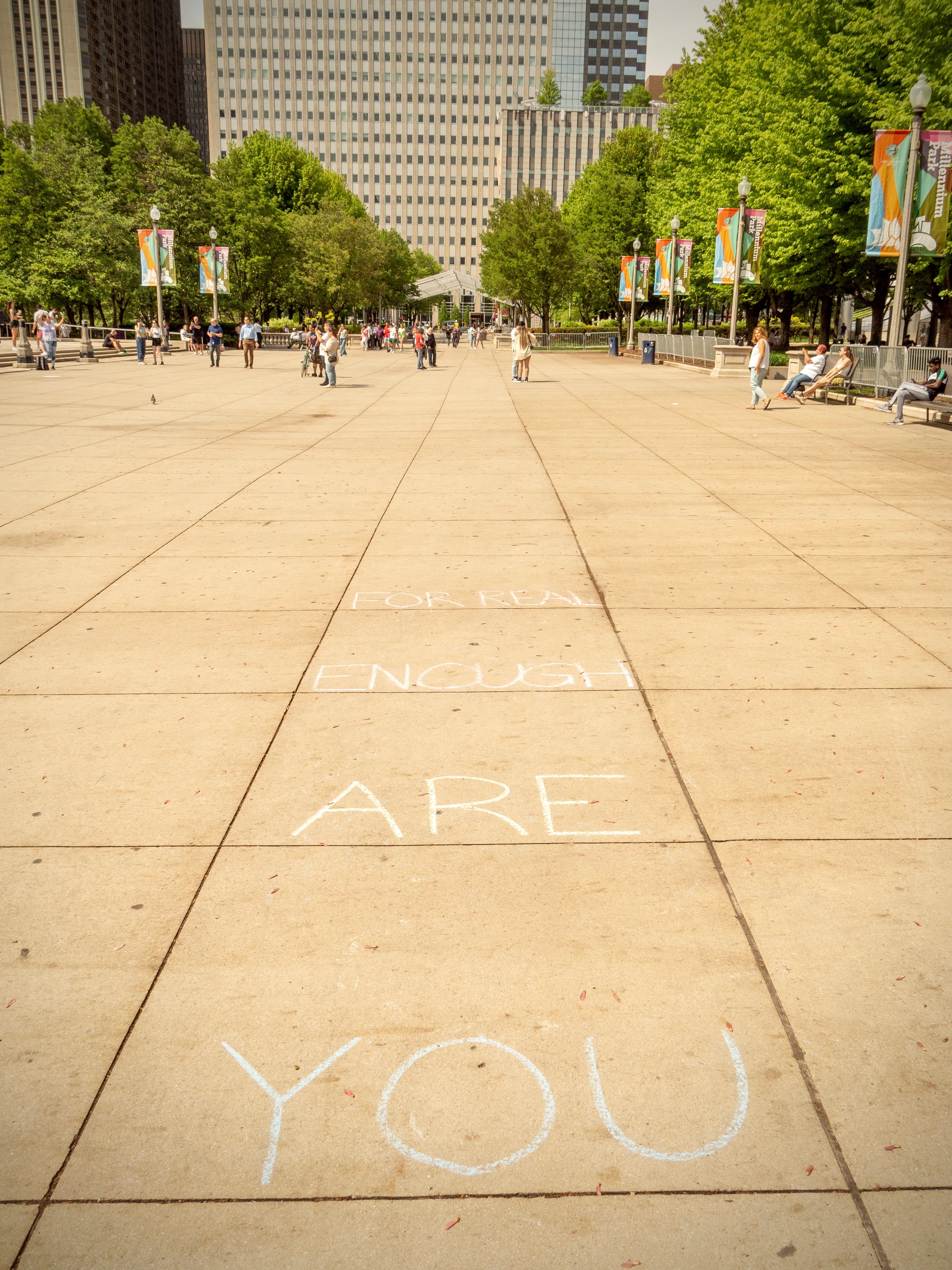
The Great Exhaustion
Lately a new epidemic has been spreading through the world of work in general, everywhere. It isn’t a virus or a disease. It is called the “Great Exhaustion”. Some will have noticed that this has been going on for some time, and that workers from many sectors and backgrounds are facing unprecedented levels of burnout. It is leading many to reconsider their career choices and to look for alternatives, even when, at times, there are none.
The Great Exhaustion refers to the overwhelming feeling of tiredness, stress and burnout felt by people who work. It isn’t just tiredness after a long day at work, but a deep sense of being drained, both mentally and emotionally. The phenomenon has become so widespread that, apparently, one in two American and European workers is hitting the wall of burnout.
The expression Great Exhaustion, the world’s great collective nervous breakdown, was coined by the University of New South Wales, in Australia, because everything gets there first, like New Year. According to a McKinsey survey, 49 per cent of the US workforce is burnt out to some degree. Same result (50 per cent of employees, 53 per cent of managers) for a broader study, commissioned by Microsoft, across 11 countries and a sample of 20,000 people. Half the people at work today are exhausted. One in two people you meet can’t take any more, is close to breaking point; maybe that person is you, maybe that breaking point is today, or tomorrow. Every now and then I have this recurring fantasy of holding an imaginary press conference for bosses, colleagues, friends, loved ones, in which I say: I can’t take any more, I’m stepping down from everything, I’m devoting myself to life. And instead, the next day, I’m back in the loop.
The factors contributing to this widespread burnout may be many. The modern workplace, with its constant connectivity, long hours and high expectations, can be a significant one. On top of that, the global pandemic may have exacerbated feelings of isolation, stress and anxiety, pushing many to the limit.
It is alarming to see how many are abandoning successful careers because of burnout. These are not people unhappy with their jobs, but professionals who have given years to their field, earning success and recognition. Yet the toll of the Great Exhaustion is leading them to reconsider their life choices.
It is essential to recognise that the Great Exhaustion is not only an individual problem, but a social one too. Employers, organisations and policymakers will have to take proactive measures to tackle it, because it represents a worrying trend, but also a wake-up call. It reminds us that work is essential, but that taking our lives back into our own hands is even more so. As a society, perhaps the time really has come to put health and happiness first, even at the cost of making compromises with career and success.
I have a feeling that young people today have understood this, and that it is opening a rift, a chasm, between them and the generations that came before.
I believe in young people enormously and, honestly, I couldn’t wait for this to happen.
It wasn’t we who were wrong for not having enough energy for the life plan we had set ourselves, and our life plan wasn’t wrong either: what was wrong were the conditions in which we tried to carry it out. There is a connection between all our individual exhaustions, and this is a political fact: they have the same causes, the same reasons and the same outcomes. One of the mechanisms that made capitalism so efficient was the offloading of externalities, the knack of hiding the costs of production, whether ecological or social.
It isn’t only economic inequality, but also the more basic fact that we are no longer able to tell tiredness from sadness. This is the price we accept to keep everything running. And the first step is to recognise that nothing we consider part of a natural, pre-established order is really a natural, pre-established order: working hours, relationships, rules. Everything can be renegotiated. We can stop, and not only individually.
Covid, for better or worse, showed us that.
It is all “too much” for me.
And I say it without fear, admitting how hard I find it to handle a crushing complexity. Too much work, too much information, too much effort, too many surreal conversations, too many hours lost on things I consider pointless.
Too much commitment to needs that aren’t real.
And I see the same drama every day in the eyes of the people I meet, who seem to want to tell you: “enough, I’m tired. I’m stopping here.”
Sometimes it seems that every contemporary conversation is, in some way, a conversation about tiredness. We are living in the never-ending last kilometre of a marathon with no recovery time.
If for years chronic tiredness was an absurd hymn to efficiency (“look at him, he’s always so busy, he must be doing brilliantly”), today it is the status quo of a generation that has understood that beyond the toil there is nothing else.
Nothing at all.
There will be no prize, and perhaps not even a better condition to aspire to.
We are all victims of a great lie: that we must grit our teeth, always, no matter what, even when it seems pointless, even when we are worn out.
How can we revolutionise our world if we are exhausted?
Tiredness has long been a collective addiction, socially encouraged in exchange for rewards that the economy had long since stopped being able to promise anyone. And it is also the result of having squeezed our private lives into the gaps between one working day and the next, into the margins of time.
What will be left at the end of all this?
How did it become possible, at some point, for our entire existences to be swallowed up by work, by frenzy, by the blind struggle for growth?
A race that has also devastated the only habitable planet we know.
By now no one has time for anything any more. Not even to marvel, to be horrified, to be moved, to fall in love, to be with themselves. The excuses for not stopping to ask whether all this running makes us happier number in the thousands and, when there aren’t any, we are very good at inventing them.
I don’t even think it makes sense, this race we were asked to return to after the forced stop of the pandemic. As if nothing had happened; as if, through that tear, we hadn’t glimpsed a clear truth: that life is something other than profit, conquest, competition. Life is also taking care: of others, of ourselves, of the place where we live. It isn’t true that “that’s just how it works”; there is always an alternative: the one that works for us.
And if there isn’t one, we have to create it.
I think about it when I walk through the magic of the woods behind our house and know that this state is only momentary, because afterwards I “have to” go back to work, back indoors, into the traffic, to produce.
But “have to” what?
I am only passing through, like everyone else.
I will die like everyone else and, as far as I know, I don’t get a second chance.
It took me too many years to get here, and I have already burned through part of my life.
But there is still time, for all of us.
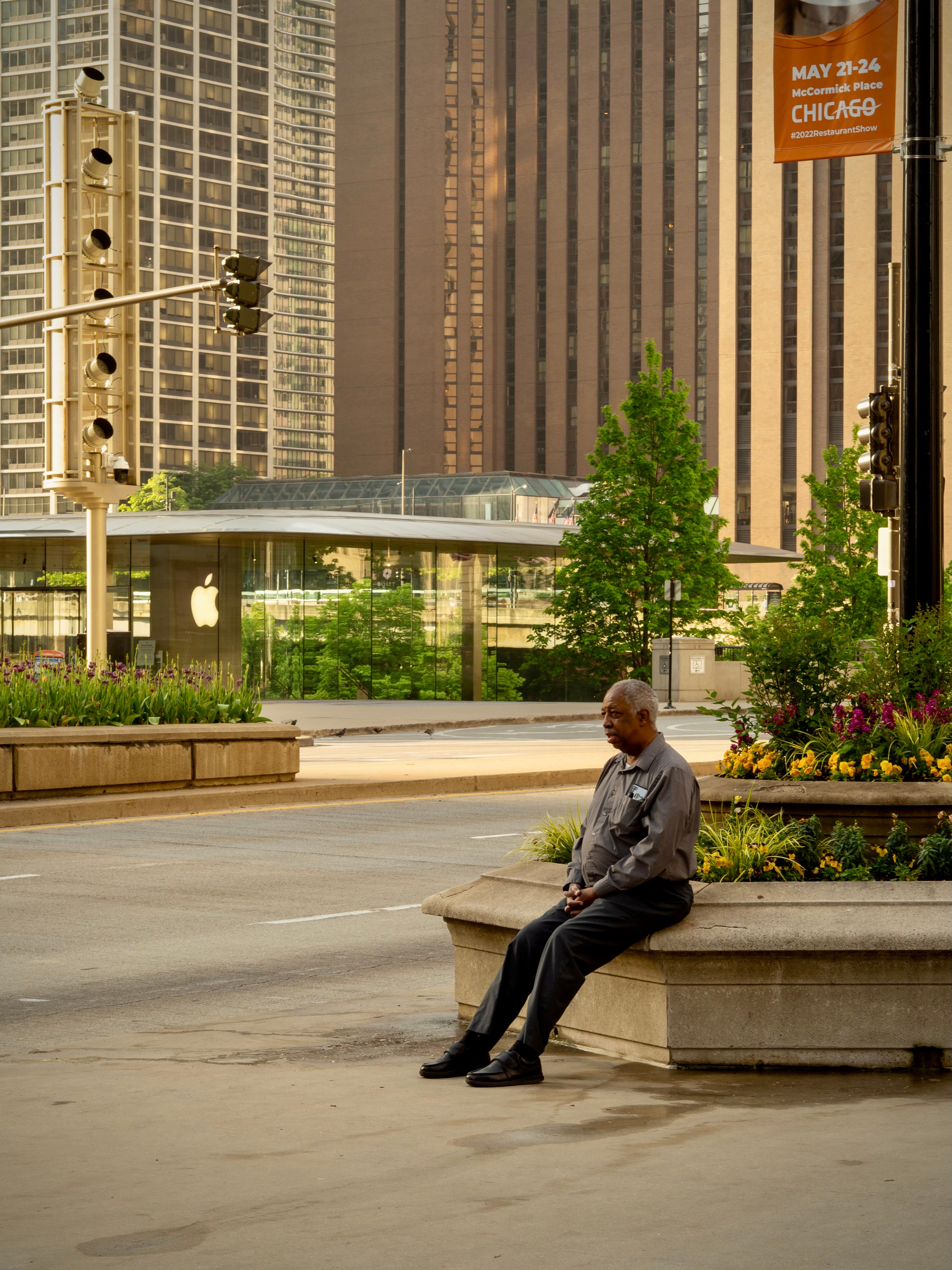
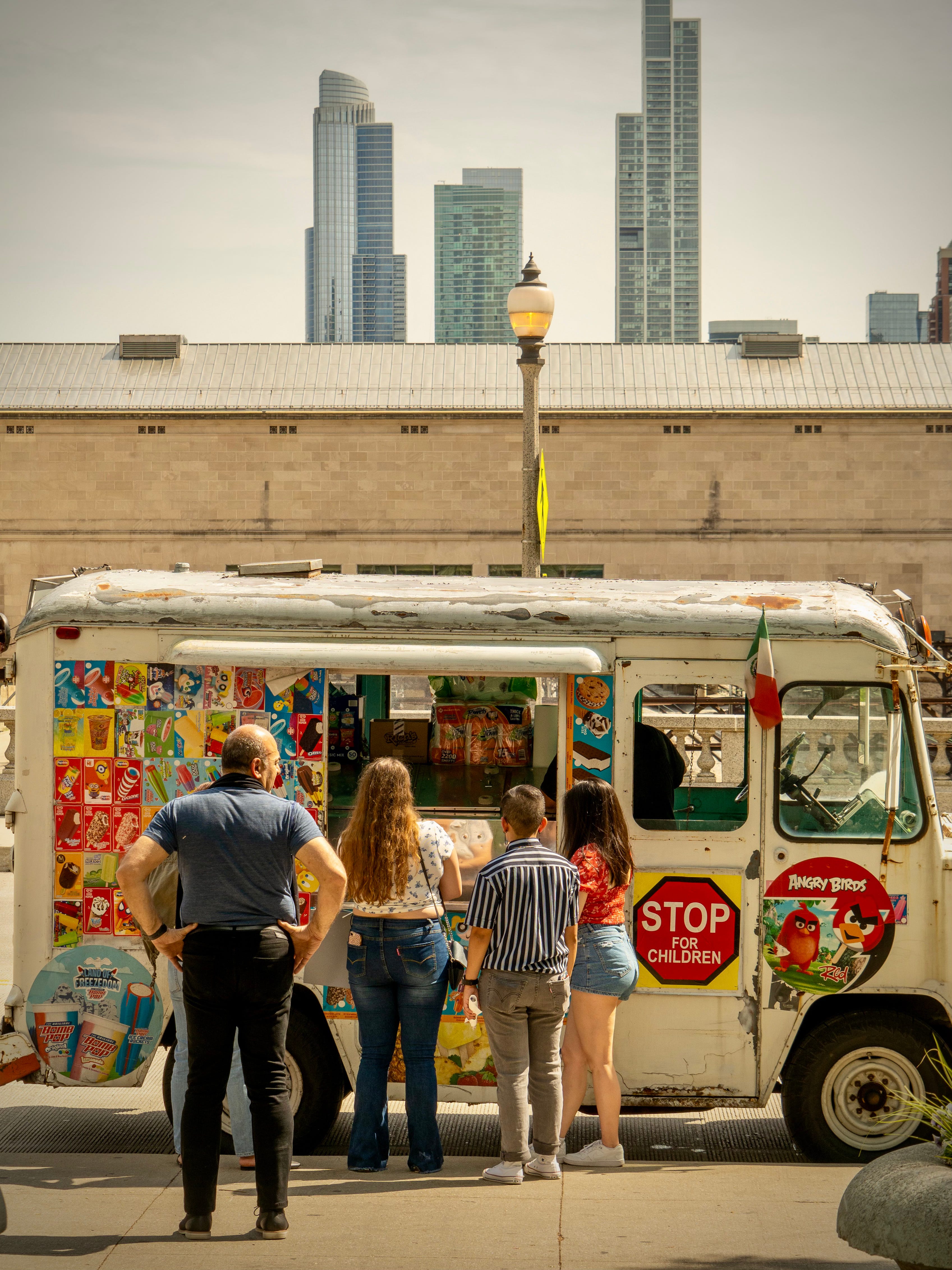
*All the photographs are mine, taken in Chicago for a reportage.
Mantica arrives every Tuesday, in Italian. Thousands of people read it, and it’s free.
Subscribe to ManticaMore letters →Stories →