2 December 2025 · Translated from the Italian
The Day Hobbies Disappeared
There is a detail that keeps coming back, almost like a hidden echo, when you study the lives of the people who changed the world: none of them was made only of the work we remember them for.
Einstein played the violin to untangle the equations that refused to come untangled. Virginia Woolf gathered stones on the beaches of Sussex and kept them as reminders of something she did not yet know how to say. Churchill painted sunsets. Nabokov bred butterflies. Marie Curie went mushroom picking with the same curiosity she brought to radioactive minerals. Chaplin collected useless objects, convinced that comedy lived in the cracks, not on the stage.
They were hobbies.
Or, as we once called them, pastimes: small everyday refuges that served no purpose other than helping us pass through time without being swept away by it. Places where we didn’t have to prove anything to anyone. Spaces where the soul could find its own rhythm again.
Then something changed. Silently, almost imperceptibly, play became production, passion became performance, free time became monetisable time. We stopped doing things for love and started doing them “for”: to grow, to show them off, to get something out of them, to feel improved, measurable, approved of.
But if everything becomes a means, what is left as an end?
The question is simple and uncomfortable: what happens to a civilisation when hobbies disappear—when nothing can be truly useless any more? Perhaps we are not losing a habit, but an inner space that kept us in balance. A light wind that kept blowing even when we weren’t listening to it.
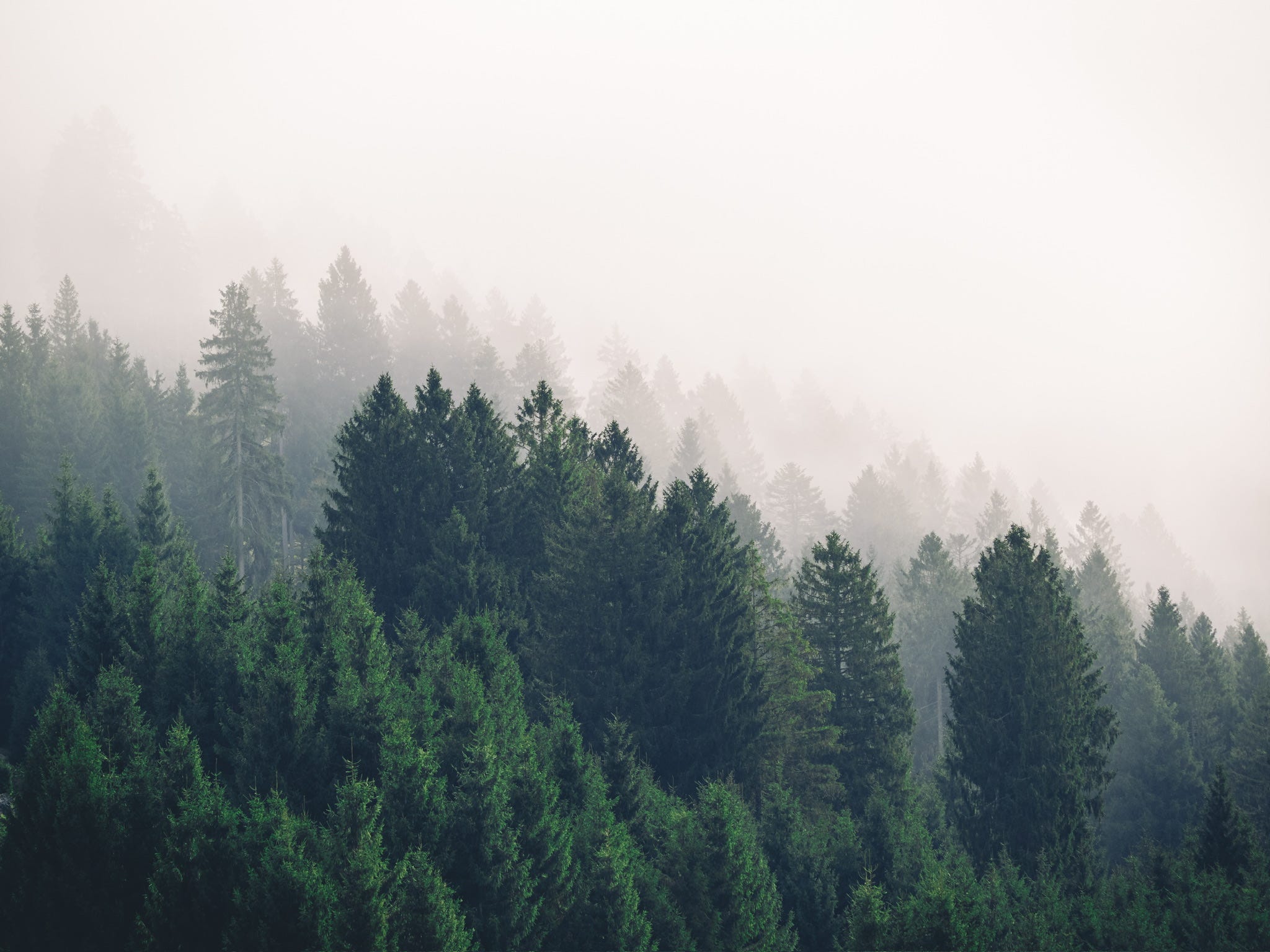
A few weeks ago I was in the woods behind our house, that stretch of hillside I know by heart and which, without fail, still manages to surprise me. It was one of those suspended Sunday afternoons, with no big plans. We had simply decided to “go for a walk”, which is the grown-up way of saying: we don’t really know what we need, but perhaps what we need is to walk.
My youngest son had found a stick. A stick is always a stick, after all. To him it was a sword, a fishing rod, a magic branch that could open portals between one puddle and the next. He walked ahead, hitting the dry leaves, drawing invisible lines in the air. He wasn’t learning anything. He wasn’t producing anything. He was just playing.
I, on the other hand, did the most natural thing in the world for an adult in 2025: I put my hand in my pocket, took out my phone and thought that the scene might be perfect for a story. The light was right, the woods incredibly quiet, his profile side-on, that stick like an extension of his imagination. I raised the phone. Then I stopped.
I realised I couldn’t simply look at him without turning that moment into something else. I couldn’t let it be just ours. I had to make it into content, a memory, a record, proof that on Sunday afternoons we were good parents doing the right things. I felt a subtle weariness rising, a kind of shame.
I asked myself when I had stopped having a wood of my own. Not this one, the physical one, but a mental space in which to do something that serves no purpose. As a child I spent whole afternoons building marble runs, taking things apart to see what was inside, drawing maps of worlds that didn’t exist. No one asked me to make anything of it. No one suggested there was potential to be developed. They were just pastimes. And that was fine.
Now, instead, I find myself instinctively measuring the value of every gesture: can it be shared? Can it become a story? Could it be useful to someone, somehow? It is such an automatic reflex that I hardly notice it any more. In that wood, phone in hand, I saw with a somewhat painful clarity that the first person who no longer has hobbies is, perhaps, me.
I put the phone back in my pocket. It wasn’t a heroic gesture, just a small act of resistance. I watched him carry on playing, completely absorbed in an activity he didn’t even know he had to defend. To him it was natural that the stick didn’t have to become anything more than what it was. For me, though, it was almost a revelation: there is still a way of doing things without turning them into projects.
As I followed him along the path, I thought that perhaps the disappearance of hobbies begins right there, in these micro-moments when we can no longer leave what we love in peace. We always have to capture it, tell it, share it, optimise it. We no longer know how to play without witnesses.
That day, in the woods, nothing special happened. No great epiphany, no promises. Just a child, a stick and a father trying, clumsily, to remember how to do something for nothing.
Perhaps this is where we start again.
Once they were called pastimes
That is what we used to call them: pastimes. The name already said it all. They were activities born to make the hours go by, to give thought somewhere to rest without tasks to complete. They weren’t for growing, improving, building an identity: they were for breathing. They could be clumsy, imperfect, utterly without purpose. And that was precisely where their strength lay.
Some people built models, some tended a tiny vegetable patch, some collected stamps, some built little wooden boats that would never touch the water. Everyone knew there was no “next level” to reach, no audience to impress, no result to achieve. A hobby wasn’t a skill, it wasn’t a project, it wasn’t an investment.
It was a way of inhabiting time without having to justify it.
That freedom from purpose seems almost a relic today. As if it belonged to a simpler age, when life didn’t constantly demand proof of efficiency or improvement. In reality it wasn’t a simpler age: it was we who were less hemmed in. Less watched. Less exposed.
Thinking back on it has a strange effect. Because the more our existence has filled up with tools to simplify it, the more we have lost the ability to stop. And pastimes were a natural antidote to this. They had no purpose other than giving us back to ourselves. They freed us from the social pressure of “becoming someone”, reminding us that there is value even in simply being.
Today, instead, it seems almost suspicious to do something that leads nowhere. As if free time still had to produce growth, improvement, a return. We have internalised the logic of returns so deeply that even what was once sacred — the useless — has become marginal, superfluous, almost something to feel guilty about.
And perhaps this is why we have begun to lose something much bigger than a pastime: we have lost a balance. Because to work well, a life cannot be made only of the important things. It also needs the negligible ones, the light, intimate ones. The ones that change nothing, but that in fact change us.
When everything is work, even when we’re not working
The transformation happened in silence, without any official declaration. At a certain point, almost without noticing, we began treating every interest as a second job. We didn’t decide it: it happened by accumulation, like a slow cultural seepage. Free time stopped being a place of decompression and became an extension of productive time. It is the new space in which to show who we are, what we can do, how much we are worth.
Social media accelerated this mutation. It introduced a lens that turns everything into performance: what we cook, what we read, what we build, even what rests us. Any hobby can become content; any content can, at least potentially, become a job.
And so we started wondering whether it is worth “really doing it” if we don’t then share it with anyone. Isn’t that absurd?
It is a subtle mechanism, almost imperceptible: you stop painting because you’re not good enough, you stop playing because you don’t have time to improve, you stop writing because you don’t know where it would lead. You no longer do things for the pleasure of doing them: you do them to find out whether they deserve your time. And your time, from this point of view, has become very demanding.
The paradox is plain: we live in the age with the most creative tools ever, and yet many people struggle to do something just for themselves. Creativity, instead of a refuge, becomes a new form of anxiety: not so much about what you create, but about what you have to prove by creating.
An invisible pressure builds to show that you are doing something, to justify your free time, to account for your pleasure.
The result is that we work even when we think we’re not working.
Not because we are truly busy, but because it is as if an outside observer came with us everywhere: at the weekend, on holiday, at the gym, in the woods. It asks questions that seem innocent:
“Is it useful?” “Does it make sense?” “Where does it get you?” “What do you get out of it?”.
But it is those very questions that keep us from living an essential part of existence: the part that leads nowhere, except towards a more human version of ourselves.
And so the mental space once devoted to play fills up with criteria. The emotional space that belonged to curiosity fills up with expectations. The space of imagination fills up with metrics. It is a world where everything can become work, and where, precisely for this reason, we find it ever harder to remember what it was like to live without necessarily having to produce something.
It isn’t a question of nostalgia. It is a question of balance. Because a life in which every gesture must have a meaning ends up losing it altogether.
The neuroscience of the useless
There is one aspect of the human brain that has always fascinated me: it works better when we ask nothing of it. It is an extraordinary organ, able to process millions of pieces of information, make decisions, imagine worlds that do not exist. And yet, to give its best, it needs pauses. Real pauses. Not the ones we call “relaxation” while we scroll through our phones, but pauses in which it can return to a sort of natural motion.
Neuroscience has a precise name for this state: the default mode network, the brain’s baseline network. It is the brain’s mode when it is not engaged in a task, when we let the mind wander, when we do something that demands neither precision nor performance. It is there that we reorganise memories, integrate emotions, turn confusion into insight. It is a silent laboratory that works while we forget to work.
The point is that this network only works under particular conditions: low levels of pressure, no evaluation, no audience. In other words: it needs uselessness. A gesture that doesn’t have to become anything. An activity that doesn’t ask to be shown. A space in which we can fail or succeed without anything changing.
When we turn a hobby into a project — when we measure it, display it, compare it — the default network switches off. The executive network takes over, the network of concentration, of planning, of “doing well”. It is indispensable, of course. It is what allows us to work, to solve problems, to get to the end of a day. But if we stay there too long, the system becomes saturated. And something inevitably sends up a signal: tiredness, distraction, irritability, the famous “brain fog” we know all too well.
Hobbies, as we once understood them, were a natural form of maintenance. They allowed the default mode to switch on effortlessly, giving the brain back a wider landscape to move through. The repetitive gesture of model-making, the fluency of playing a few notes, the slowness of a jigsaw puzzle, the suspended time of analogue photography… they were all ways of freeing mental activity from the weight of the goal.
This is where we find a simple, almost banal truth, and yet one that is often ignored: the mind does not regenerate through performance, but through wandering. Not in productivity, but in the margin. Not in doing well, but in doing without purpose. That is why hobbies mattered: because they gave the brain back a territory where there was no need to run. A space where life went back to flowing at a more human pace, slower, better able to listen.
And perhaps the loss of hobbies is not only a cultural fact, but a biological one. It is an impoverishment of the way we think, feel, remember. It is like taking away one of the brain’s sources of oxygen. That is why, when we return to a useless gesture, something strange happens: we feel more present, lighter, more attentive. Not because that activity has any external value, but because it gives back an internal one. A value that cannot be measured, but can be felt.
The disappearance of hobbies as a symptom of a tired civilisation
The disappearance of hobbies, then, is not just a question of tastes or habits. It is an indicator, a faint signal of something moving beneath the surface of our lives. Every age leaves traces in the way people fill their time: we are leaving a trace of subtraction. It is as if we had stopped granting ourselves spaces that produce nothing. And this, inevitably, makes us poorer.
After all, hobbies were a spontaneous form of resistance. They were a natural form of self-regulation against an excess of meaning, against the tyranny of the goal, against that creeping sense of always having to become something more. They were a free zone where we could simply be, without having to improve ourselves. A place where identity could rest, like an animal finally slipping into its den.
Today this space has shrunk. Society demands visibility, skills, continuous growth. Even when no one really demands it, it is as if we had internalised a voice whispering that unproductive time is a lack, a waste, a fault. So we find ourselves living in a kind of permanent acceleration that doesn’t concern only work: it concerns everything. Even rest has to prove it is useful, even a holiday has to have a purpose, even fun has to become postable.
And the effects often aren’t visible straight away. They arrive in small, ambiguous forms: irritability, difficulty concentrating, a sense of emptiness that gets mistaken for tiredness. They arrive as signals we ignore until they become chronic. But what is missing, in reality, is simple: a place where nothing is asked of us.
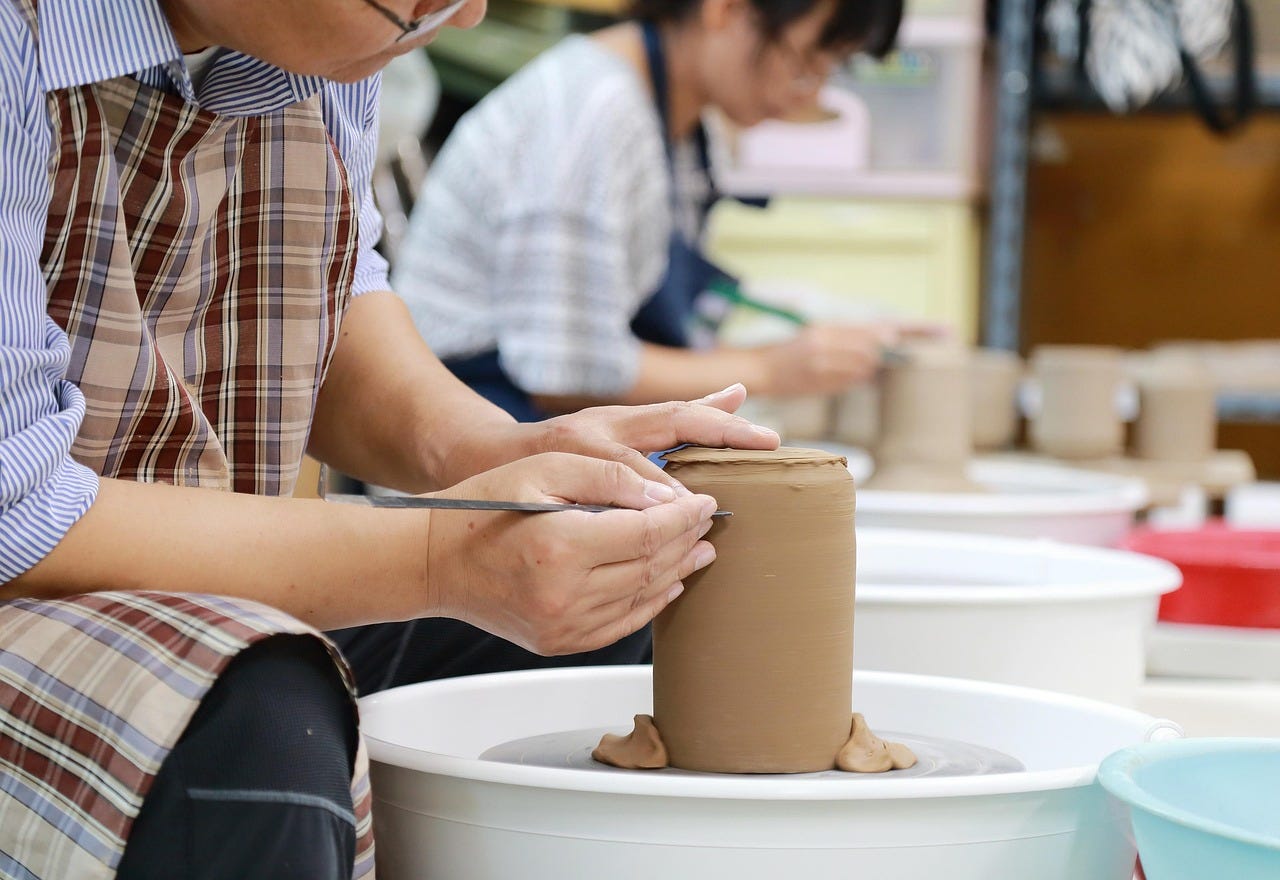
On my travels I have seen it many times, without looking for it: a woman weaving baskets in a village in Kenya as the market slowly woke up; an old fisherman in Norway mending nets too worn to be of any real use; a boy in an Andean community building small stone sculptures and then leaving them at the edge of the path, for no reason, as if they were messages for whoever came by next. They all had one thing in common: they were doing something that didn’t have to become anything.
Watching them I asked myself, every time, what a civilisation is telling us when it loses its gestures done for nothing. And the answer, painful as it is, seems clear: a civilisation without useless things is a civilisation that can no longer breathe. It has pushed every space towards production, every talent towards growth, every hour towards a goal. It has forgotten that there is a fragile balance between doing and being, and that when this balance breaks, it isn’t our commitments that collapse, but people.
The disappearance of hobbies is not a quirk of modern times: it is a symptom. A way in which the world is telling us that we are living too cramped, too watched, too compressed inside roles that leave no margin. And perhaps the only real question to ask is this: what room is left for the human when everything, even pleasure, has to justify itself?
Because if nothing can be useless any more, then nothing can be truly ours any more.
Returning to the useless
Perhaps, in the end, it all comes down to this: we cannot always live facing outwards. We cannot keep relying on other people’s gaze to understand who we are. We cannot expect every gesture to have a return, a form, a recognised value. We need intimate places, actions that don’t have to prove anything. Spaces that don’t ask to be improved, shared, explained.
Hobbies were once that place. An invisible inner tube that kept the whole structure of our lives in shape. They weren’t there to relax us, at least not in the trite sense of the word: they were there to put us back together. To find an inner continuity again. To remind us that there is a part of us that doesn’t run, doesn’t compete, doesn’t perform. A part that, when ignored for too long, grows dim. And when it grows dim, everything grows dim.
I often think that the useless is not useless at all. It is a border territory where identity stops stiffening and becomes something fluid again, mobile, capable of wonder. It is the space where we can allow ourselves to fail without consequences, to succeed without merit, to do without purpose. A free gesture that asks for nothing in return: no applause, no approval, no growth. Only presence.
Perhaps we could start again from there. From one small thing that will lead nowhere and that, precisely for this reason, can bring us a little closer to ourselves.
Read five pages without underlining.
Draw without trying to get better.
Walk without counting your steps.
Mend a useless object.
Play three crooked notes.
Give time to something that would have no use for our talent.
It isn’t an invitation to lightness — or not only. It is an invitation to care. To give our mind back a margin, a zone where the world asks nothing of us and we ask nothing of the world. A pause that is not absence, but return.
And perhaps, in that small crack of uselessness, we might notice that something is still moving. A kind of quiet we had forgotten. A desire that had not died out, only fallen silent. A part of us that had been waiting patiently, like an animal that learns to trust again once it understands it doesn’t have to perform.
A hobby won’t change our lives. But it might give time back its depth. And give us the chance to feel — at last — more whole.
Mantica arrives every Tuesday, in Italian. Thousands of people read it, and it’s free.
Subscribe to ManticaMore letters →Stories →