7 July 2026 · Translated from the Italian
A Thousand Hours
In Livermore, California, inside a fire station, there is a light bulb that has been burning since 1901. A carbon filament, made by hand at the end of the nineteenth century. It gives off a faint, amber light, more like an ember than a lamp. Six generations of firefighters have passed beneath that light, night shifts, alarms, young men grown old. It was there before all of them, and it will be there after. It has been on for more than a hundred and twenty years. They have switched it off only a handful of times in all, and one time in particular has become famous: in 1976, for twenty-two minutes, just long enough to move it to the new station, escorted like a relic, with the cable cut clean so as not to risk unscrewing it. Then they reconnected it, and it went back to doing what it has always done. Lasting.
Twenty-three years after it was first switched on, on the other side of the world, the opposite happened. Geneva, the day before Christmas Eve, 1924. The biggest light bulb manufacturers on the planet, General Electric, Osram, Philips and the rest, sat down around a table and signed an agreement that has gone down in history as the Phoebus cartel. The problem was simple: light bulbs lasted too long. The technology of the time could easily reach two thousand five hundred hours, and a thing that lasts is a thing you buy only once. So they decided, by contract, that from then on a light bulb should last a thousand hours. Less than half of what they could already achieve. Anyone who went over was fined.
It is considered the birth certificate of planned obsolescence. And it is a date that ought to be remembered, because on that day something new happened in human history. For thousands of years we had built objects trying to make them last as long as possible. That day, for the first time, we agreed to build them so that they would give out sooner.

From that table in Geneva, the principle spread everywhere. The phone that slows down after the update. The printer that stops working after a preset number of pages. The washing machine that dies, right on time, shortly after the warranty runs out, and repairing it costs almost as much as buying a new one, so you buy a new one. Obsolescence has stopped being a manufacturing defect. It is the design. Everything must wear out, break, make itself useless quickly enough to justify the next round of production.
So far, you might say, this is economics. Cynical, but economics. What interests me is something else, and it is the moment the principle left objects and entered us.
Because today we manufacture lives the way we manufacture light bulbs. Careers with an expiry date, designed to be replaced every few years. Skills born with their date of death already stamped on them. Fixed-term relationships, interchangeable passions, cities we pass through. Every identity is a provisional version, a beta waiting for the update. Free time has become an interval between two duties. The future, a quarterly target. We have learned to think of ourselves in stockroom terms: what pays, what has expired, what needs replacing.
And the whole scaffolding rests on a single pillar. Work.
Work has become the universal container of our worth, the answer that closes every question. You’re tired, anxious, absent, unreachable for months: “it’s work”. As if saying it were enough to justify everything. As if that answer explained something, instead of being precisely the problem. In the name of work everything has become permissible: producing is legitimate by definition, consuming is almost a civic duty, and a life full of things to do passes for a full life. No one asks any more: full of what?
There was a reversal, somewhere along the way, and almost no one noticed. The economy was born as a tool: it served life, it supplied it with things. At some point the tool became the end. Now it is life that serves the economy. We produce to sustain production, we consume to sustain consumption, and the question of what actually serves the people doing the living has slipped out of the conversation, like a naive question nobody asks any more.
And yet the question exists, and it is a moral question disguised as a technical one. Why sell something that lasts a lifetime, if I can force you to buy it again every two years? Put from the producer’s side, it is a strategy. Put from the side of the people living, it sounds different: why do we accept as normal that the things around us, and then our jobs, and then our bonds, and then we ourselves, are designed to end quickly? The real answer is that the question takes time, and time is exactly what the system has taken from us. We have things to do. Work to do.
Umberto Galimberti has been saying it for decades, and his summary is still the sharpest: technology has stopped asking why. It knows only the how. It works, and its working is the only justification it needs. And when the how takes command, everything becomes admissible, as long as it works. Even wearing down the human in the name of efficiency. Even building a world that breaks one piece at a time, as long as another is produced straight afterwards.
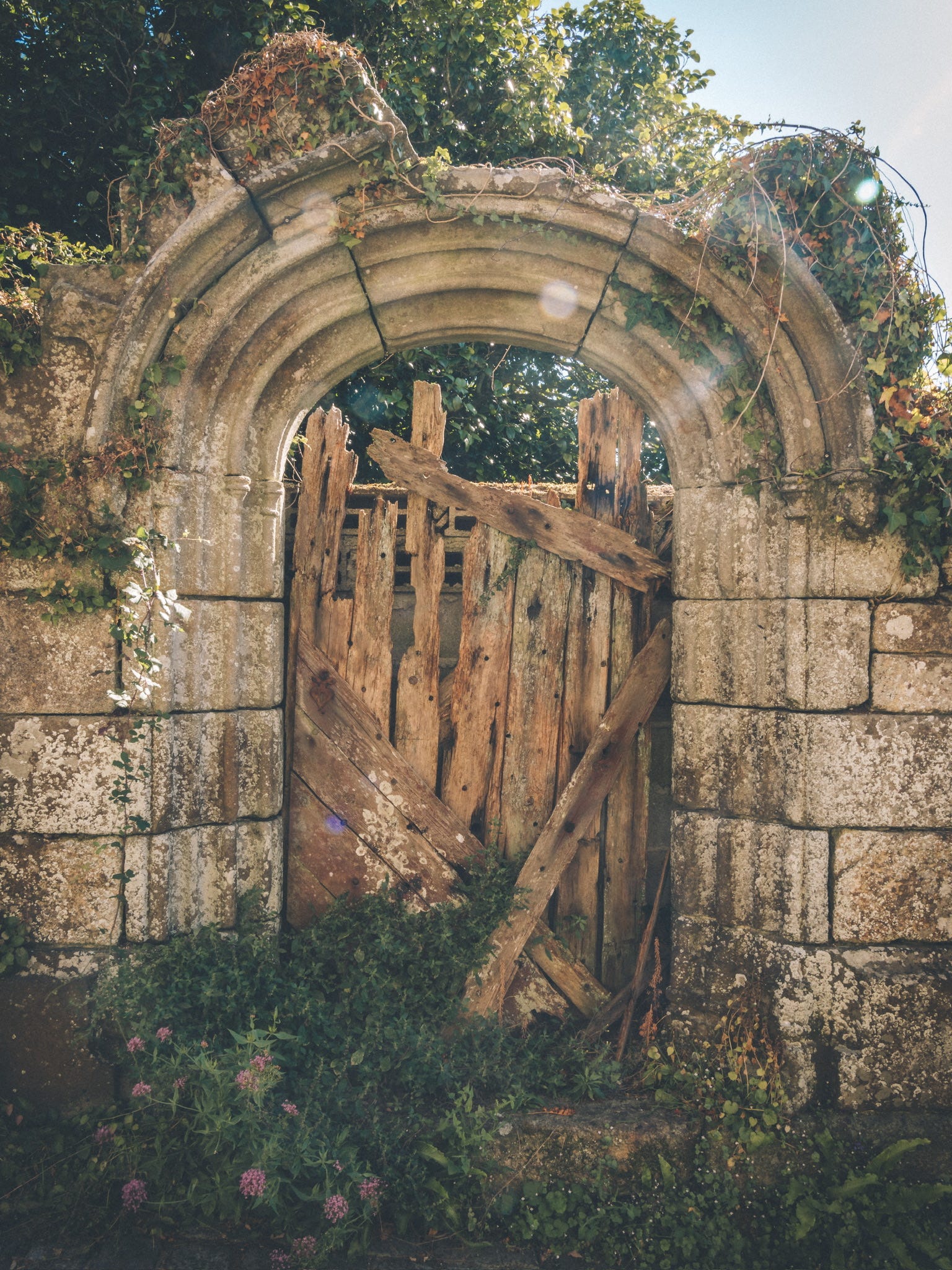
And yet something inside us still recognises quality when it meets it. We feel it in our hands. Your grandfather’s knife that still cuts after sixty years. The wooden table covered in marks, where every mark is a dinner. The mended jacket that holds up better than three new ones. Objects that last have one thing in common: they wear time on them instead of being erased by it. They age, and as they age they become more ours.
That knife feels like ours, and a new one doesn’t, and the reason lies in the way the brain works. We grow attached by accumulation, not by purchase. The bond with a thing is built slowly, one use at a time, while memory soaks it with all the hands that have held it. The new gives us a brief jolt, a small flash of pleasure that fades almost at once. Real attachment is another substance, slower, and it settles only with time. An object that lasts gives us time to love it. An object that expires doesn’t have time to become anything.
Nature has always known this. The oldest living being on the planet is a pine that grows alone on the exposed slopes of the White Mountains, in the same American state as that light bulb. It is almost five thousand years old, and its secret is precisely the wind, the rock, the thirst. It grows extremely slowly, building dense, resinous wood, and that slowness is the whole of its longevity. In nature, almost always, what goes slowly lasts, and what rushes dies young.
It holds for things, and it holds just the same for everything else. Friendships that bear the marks. Trades learned slowly, which stay in your hands for ever. Mended bonds, which after the mending hold in a place where before they were fragile. Everything that has value, if you look closely, is something that has passed through time instead of being consumed by it.
Perhaps this is the possibility we have left, and it is not as small as it seems. There are people who have started choosing things that last again, repairing instead of replacing, letting a trade or a bond take the time to grow old. People who inhabit time rather than consume it. It is a tiny resistance, made of everyday gestures, of care, of maintenance. But it is the only kind you can practise with your own hands, every day, without asking anyone’s permission.
In Livermore, meanwhile, the light bulb is still on. Its light grows ever fainter, they say, a little less every year. A hundred and twenty years of service have worn it down, as is only right. We have even put a camera beside it to watch over it day and night, and it is already the fourth: the other three broke one after the other, while it went on shining. We built the eyes to watch it die, and they were the ones that went out. But tonight, when in Geneva and everywhere else millions of light bulbs born to last a thousand hours go out, it will still be there, with its hand-made filament, doing the only thing it was built for.
Lasting.
Mantica arrives every Tuesday, in Italian. Thousands of people read it, and it’s free.
Subscribe to ManticaMore letters →Stories →